
Technology moves fast—so fast that today’s breakthrough can become tomorrow’s buzzword. If you’re trying to separate real progress from marketing hype, you’re not alone. This article cuts through the noise to examine the core shifts truly reshaping digital products and software ecosystems. We focus on practical impact: how emerging technology innovations are transforming app development, user experience, and modern software architecture. Drawing on hands-on analysis of smart app ecosystems and optimization frameworks, we break down what’s actually being implemented in the tools you use every day—so you can anticipate what’s next with clarity and confidence.
From Assistants to Agents: The Dawn of Proactive AI
Not long ago, digital assistants waited patiently for a wake word. You’d say, “Hey Siri,” hear the soft chime, and then issue a command. The interaction felt transactional—like pressing a button and waiting for a click in return. Useful, yes. Proactive? Not even close.
Now, however, we’re witnessing a core shift. AI agents no longer just respond; they anticipate. Instead of asking your assistant to book a flight, imagine waking up to a gentle notification suggesting an earlier departure because a storm is rolling in (you can almost hear the rain tapping the window). That’s the difference between reactive tools and autonomous agents: the latter execute complex, multi-step tasks without being micromanaged.
Some critics argue this level of automation feels intrusive. After all, do we really want software predicting our needs? It’s a fair concern. Yet when powered responsibly, advanced Large Language Models (LLMs) combined with personalized data graphs create contextual awareness—not surveillance, but relevance. The system understands patterns, preferences, and intent, reducing friction rather than adding noise.
Consequently, these agents are becoming the new “operating system” for our lives. They orchestrate actions across travel apps, calendars, budgeting tools, and project boards—systems that once felt like scattered tabs humming independently. Now they move in sync, like instruments tuning before a concert.
Developers embracing emerging technology innovations are designing hyper-personalized ecosystems that feel intuitive to the touch and seamless in motion. Pro tip: the real optimization win isn’t flashy features—it’s removing steps users never wanted to take in the first place. When AI solves problems before we articulate them, engagement stops feeling forced and starts feeling natural.
Building Blocks of the Future: The Rise of Composable Architecture

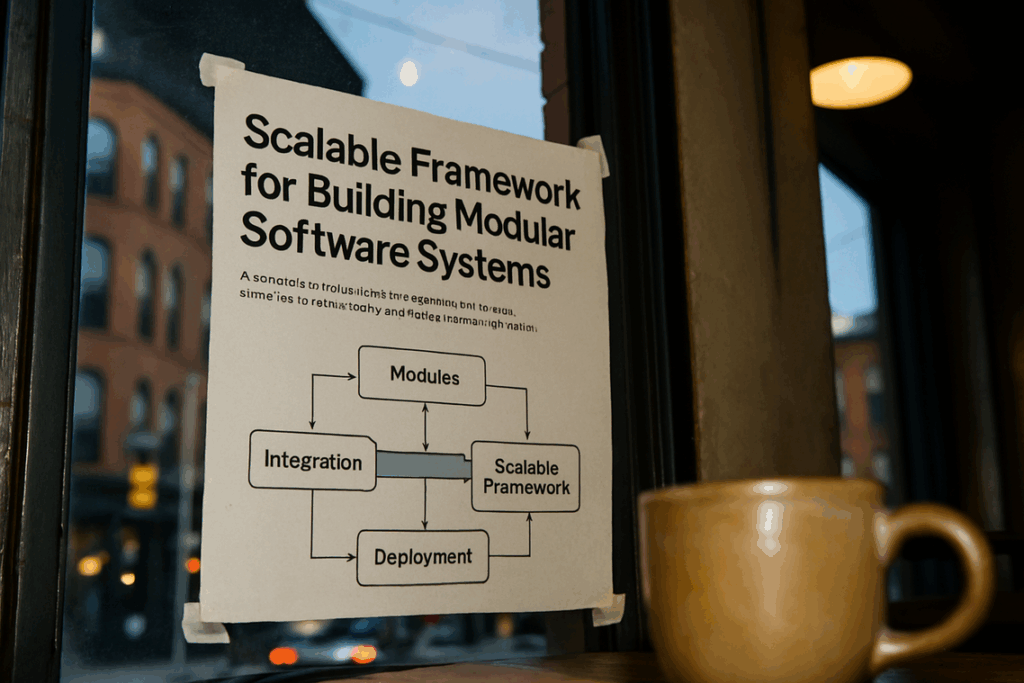
Imagine building software like a LEGO city. Instead of pouring one massive slab of concrete, you snap together small, specialized bricks. That’s composable architecture: a design style where applications are assembled from independent components called Packaged Business Capabilities (self-contained modules that handle a specific function, like payments or search).
Think modular, not monolithic. If one brick cracks, you replace it without bulldozing the city. Traditional monoliths, by contrast, are like Jenga towers—pull the wrong piece and everything wobbles.
The benefits are tangible:
- Faster feature launches because teams update a single module, not the entire stack
- Greater resilience since failures stay isolated instead of cascading
For end-users, this means smoother updates and hyper-personalized experiences (Netflix-style tweaks without the dreaded “app under maintenance” banner). For developers, it unlocks rapid A/B testing, feature flagging (turning features on or off without redeploying code), and iterative optimization with minimal risk.
This model pairs naturally with emerging technology innovations, where adaptability is survival. Modern APIs, microservices, and cloud-native frameworks have made composability mainstream rather than experimental. It even reshapes strategy, much like how real time dashboards changed analytics—see how real time innovation alerts are transforming decision making: https://etsiosapp.net/how-real-time-innovation-alerts-are-transforming-decision-making/.
In short, composable architecture turns software into a living system—flexible, swappable, and always ready for the next brick.
Beyond the Flat Screen: The Practical Application of Spatial Computing
Spatial computing moves beyond basic AR/VR (augmented and virtual reality) into something far more powerful: the seamless integration of digital content into our three-dimensional world. In simple terms, it turns physical space into an interactive interface. Instead of staring at a rectangle in your hand, information lives around you—persistent, responsive, and context-aware. Think less “screen time” and more “world time.”
So what’s driving this shift? First, hardware and software convergence. Lightweight headsets, advanced sensor technology (tools that detect motion, depth, and environment), and robust development platforms are finally working together. As a result, spatial apps are becoming more practical, affordable, and scalable. This is where emerging technology innovations are accelerating adoption across industries.
More importantly, the benefits are tangible. Retailers now offer immersive e-commerce with virtual try-ons, reducing returns (and buyer’s remorse). Engineering teams collaborate on 3D industrial designs from different continents. Remote technicians receive overlaid repair instructions in real time. Financial analysts manipulate complex data visualizations in midair, spotting trends faster than on spreadsheets.
Naturally, some argue smartphones are “good enough.” However, every major platform shift—from desktop to mobile—reshaped productivity and profits. Spatial computing represents the next frontier, where the screen is everywhere. For developers and users alike, that means richer experiences, smarter workflows, and a decisive competitive edge.
Intelligence at the Source
Last year, my smart doorbell froze right as a package was being delivered. The video had to travel to a distant cloud server and back before I could see it (not ideal when porch pirates move fast). That moment made edge computing click for me.
Edge computing means processing data locally—on your phone, car, or IoT sensor—instead of sending it far away to the cloud. Think of it as giving devices their own mini brain. With billions of IoT devices now online (Statista estimates over 29 billion by 2030), constant cloud trips create delays and risk.
The push for real-time systems—like autonomous vehicles—demands near-INSTANT decisions. A half-second delay isn’t dramatic in streaming, but it’s critical on the road. Add rising privacy concerns and regulations like GDPR, and keeping sensitive data closer to the source makes sense.
The result? Faster apps, fewer outages during weak connectivity, and stronger security. That’s why edge computing is leading emerging technology innovations—and why users feel the difference immediately.
Your Roadmap for Navigating the Next Wave of Innovation
You came here to understand where innovation is heading—and now you can clearly see how Proactive AI, Composable Architecture, Spatial Computing, and Edge Intelligence work together to power the next generation of digital ecosystems. These aren’t isolated breakthroughs; they’re interconnected forces reshaping how technology anticipates needs, adapts instantly, and delivers smarter user experiences.
The real opportunity lies in solving real problems. When you focus on user outcomes instead of hype, you position yourself to build, adopt, and invest with confidence.
Don’t get left behind while innovation accelerates. Get real-time innovation alerts, actionable tech breakdowns, and proven optimization frameworks—trusted by thousands of forward-thinking builders. Start exploring the tools shaping tomorrow today.
