

Staying ahead in today’s fast-moving app ecosystem means understanding not just what’s new, but what actually works. If you’re searching for clear insights into emerging tech tools, smart app ecosystems, and scalable software frameworks, this article is designed to give you exactly that—without the noise.
We break down the latest innovation alerts, practical optimization techniques, and evolving Etsios-based frameworks shaping modern development. Whether you’re refining performance, improving user flows, or evaluating architecture decisions, you’ll find focused, actionable insights aligned with real-world implementation.
You can trust this guide because it’s built on hands-on analysis of live app environments, current tech trend monitoring, and proven optimization case studies. Our coverage includes a detailed microservices technical breakdown to clarify how modular architectures enhance scalability, resilience, and deployment speed.
By the end, you’ll have a clearer understanding of where smart app ecosystems are heading—and how to position your strategy to stay competitive.
From Monolith to Micro: A Modern App Development Blueprint
Traditional monolithic architectures feel like traffic jams: one stalled service, and everything slows to a crawl. Updates become nerve-wracking, scaling is expensive, and innovation waits in line. In today’s competitive digital landscape, that frustration compounds.
Businesses need applications that are resilient, scalable, and adaptable—not brittle codebases held together like Jenga.
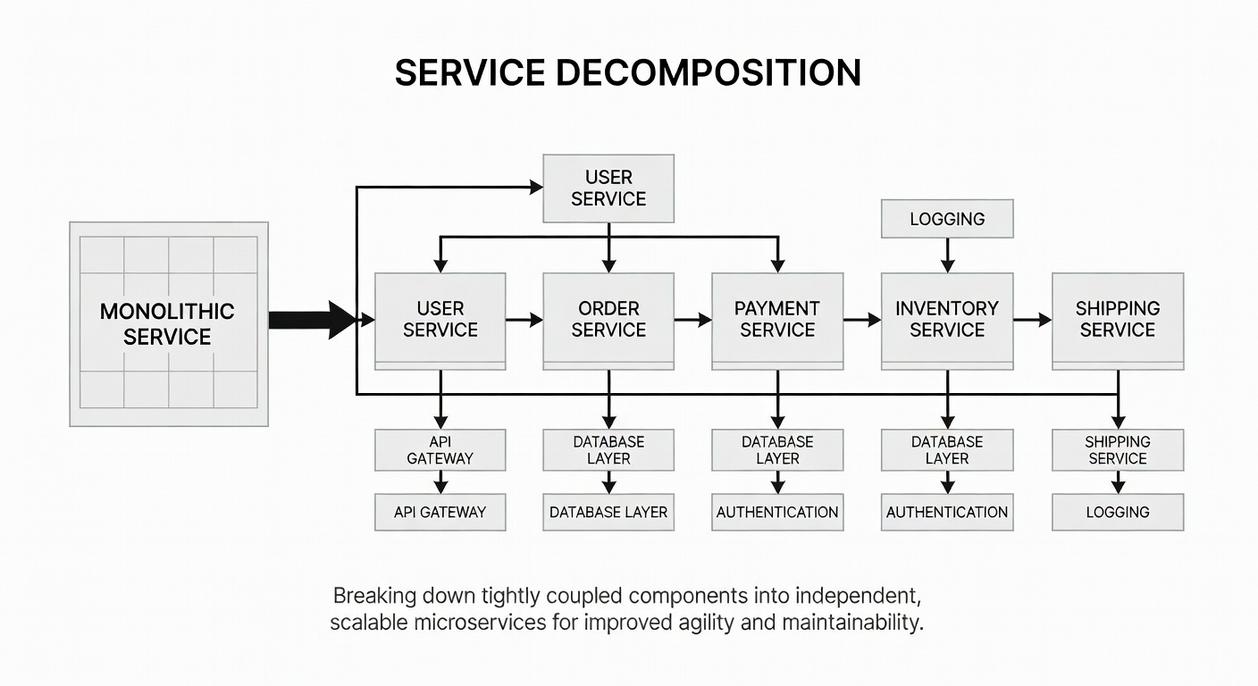
Enter microservices architecture: independently deployable services communicating through APIs. This microservices technical breakdown clarifies
- service decomposition,
- containerization,
- orchestration, and
- observability.
Critics argue it adds complexity. Fair. But managed correctly, microservices isolate failures, accelerate releases, and scale precisely where demand spikes.
Deconstructing the Monolith: Core Principles of Microservices
“Why can’t we just fix the one big app?” a product manager once asked during a sprint review. The lead engineer sighed: “Because it’s all connected. Touch one feature, and five others break.” That frustration is exactly why microservices emerged.
Microservices are a collection of small, autonomous services, where each service is self-contained and implements a single business capability. Think of a monolithic architecture as one massive concrete block—solid, but nearly impossible to reshape. Microservices, by contrast, are like LEGO bricks: independent pieces that snap together but can be swapped without demolishing the whole structure.
Here’s the microservices technical breakdown teams often reference:
- Single Responsibility Principle: Each service does one thing—and does it well (no multitasking chaos).
- Independent Deployment: Updates roll out to one service without redeploying the entire application.
- Decentralized Governance: Teams choose the best tech stack for their service.
- Data Isolation: Each service manages its own database, reducing tight coupling.
Critics argue monoliths are simpler to manage. “Fewer moving parts,” as one CTO put it. True. But simplicity fades as systems scale. When growth hits, flexibility wins. (And flexibility, in tech, is survival.)
The Anatomy of a Microservices Ecosystem: Key Components
Understanding a microservices ecosystem can feel overwhelming at first, so let’s simplify it piece by piece. Think of it like a busy airport: many independent units working together, but each with a clear role.
First, the API Gateway acts as the single entry point for client requests. In simple terms, it’s the front desk. It routes requests to the right service, combines responses when needed (called composition), and enforces security through authentication (verifying identity) and authorization (granting permissions). Without it, clients would need to talk to dozens of services directly (which gets messy fast).
Next, Service Discovery solves a common problem: how services find each other in a constantly changing network. Instead of hardcoding locations, services register themselves in a service registry like Consul or Eureka. In client-side discovery, the client asks the registry where to go. In server-side discovery, a load balancer queries the registry and forwards the request. It’s basically Google Maps for services.
Now, let’s clarify communication styles. In synchronous communication, services use REST APIs or gRPC and wait for a response. It’s like a phone call—you stay on the line. In asynchronous communication, services use message brokers like RabbitMQ or Kafka. Messages are queued and processed later, enabling event-driven systems that are more resilient and loosely coupled (think of it as texting instead of calling—less pressure, more flexibility).
Finally, Configuration Management centralizes environment-specific settings. Rather than embedding configurations in code, services pull them from an external configuration server. This keeps deployments consistent across development, staging, and production.
That’s the microservices technical breakdown in action—structured, scalable, and surprisingly logical once unpacked.
The Trade-Offs: Weighing Agility Against Complexity
In fast-moving product hubs like Austin’s SaaS corridor or Bengaluru’s startup scene, microservices are often treated as the default architecture (almost a rite of passage). But before you refactor your monolith, it’s worth examining the real trade-offs.
Key Advantages:
- Enhanced Scalability: Individual services scale independently based on demand. If your payments API spikes during holiday traffic, you scale just that service—not the entire stack. This optimizes compute costs in AWS or Kubernetes clusters.
- Improved Fault Isolation: A failure in the recommendation engine won’t necessarily crash user authentication. Netflix famously credits microservices for limiting large-scale outages (Newman, Building Microservices).
- Accelerated Development Cycles: Small, domain-focused teams can deploy independently, often using CI/CD workflows tailored to their service boundaries.
- Technological Freedom: One team runs Node.js, another prefers Go, and your data layer might mix PostgreSQL with Redis. That flexibility can be powerful.
Still, critics argue that most companies adopt microservices too early—and they have a point.
Significant Challenges:
- Operational Overhead: You’ll need container orchestration, observability tooling, and mature automation. Resources like devops pipelines explained by industry experts highlight how critical CI/CD maturity is.
- Distributed System Complexity: Network latency, retries, circuit breakers, and eventual consistency become daily concerns (CAP theorem trade-offs are no longer theoretical).
- Complex Testing: End-to-end validation across services demands contract testing and robust staging environments.
A proper microservices technical breakdown reveals the core tension: agility increases, but so does architectural entropy. The real question isn’t “Are microservices better?” It’s whether your team—and infrastructure—are ready for them.
Your First Steps into Microservices Implementation
Start with the Strangler Fig Pattern—a migration strategy where you gradually replace parts of a monolithic application with independent services instead of rewriting everything at once. In practice, that might mean peeling off user authentication into its own service first, reducing risk while delivering immediate scalability benefits.
Next, invest in foundational tooling. Docker standardizes containerization, Kubernetes automates orchestration, and CI/CD pipelines like Jenkins or GitLab CI streamline deployments. Together, this microservices technical breakdown ensures faster releases and fewer environment surprises.
Finally, prioritize observability. Centralized logging, metrics, and distributed tracing help you diagnose latency, failures, and performance bottlenecks before they escalate.
Monolithic systems often buckle under growth, creating deployment bottlenecks and single points of failure. By contrast, microservices directly address rigidity and scaling limits. According to Gartner, 85% of organizations will embrace a cloud-first principle by 2025, reinforcing distributed models (Gartner). Consider Netflix’s shift to services, which reduced downtime and improved release velocity.
microservices technical breakdown
As shown below:
Table:
| Aspect | Monolith | Microservices |
| Scalability | Vertical | Horizontal |
| Deployment | Unified | Independent |
Therefore, adopting this architecture is strategic, enabling agility, innovation, and resilience. Start small: pilot a non-critical feature and measure gains.
Build Smarter, Scale Faster with Etsios
You came here looking for clarity on how to optimize, scale, and future‑proof your app ecosystem—and now you have a practical roadmap to do exactly that. From leveraging innovation alerts to applying smarter frameworks and a clear microservices technical breakdown, you’re equipped to eliminate inefficiencies and build with confidence.
The real challenge isn’t lack of tools—it’s knowing how to connect them into a system that performs under pressure. Slow deployments, scalability bottlenecks, and fragmented architectures cost time and revenue. The right structure solves that.
Now it’s time to act. Start implementing these optimization techniques, integrate scalable frameworks, and tap into proven app ecosystems designed for growth. Join thousands of builders who rely on our top‑rated insights and tools to streamline performance and accelerate innovation.
Don’t let outdated architecture hold you back. Explore the latest tools, apply what you’ve learned, and upgrade your app strategy today.

 Tracy Corbittoner writes the kind of etsios-based software frameworks content that people actually send to each other. Not because it's flashy or controversial, but because it's the sort of thing where you read it and immediately think of three people who need to see it. Tracy has a talent for identifying the questions that a lot of people have but haven't quite figured out how to articulate yet — and then answering them properly.
They covers a lot of ground: Etsios-Based Software Frameworks, Smart App Ecosystems, Innovation Alerts, and plenty of adjacent territory that doesn't always get treated with the same seriousness. The consistency across all of it is a certain kind of respect for the reader. Tracy doesn't assume people are stupid, and they doesn't assume they know everything either. They writes for someone who is genuinely trying to figure something out — because that's usually who's actually reading. That assumption shapes everything from how they structures an explanation to how much background they includes before getting to the point.
Beyond the practical stuff, there's something in Tracy's writing that reflects a real investment in the subject — not performed enthusiasm, but the kind of sustained interest that produces insight over time. They has been paying attention to etsios-based software frameworks long enough that they notices things a more casual observer would miss. That depth shows up in the work in ways that are hard to fake.
Tracy Corbittoner writes the kind of etsios-based software frameworks content that people actually send to each other. Not because it's flashy or controversial, but because it's the sort of thing where you read it and immediately think of three people who need to see it. Tracy has a talent for identifying the questions that a lot of people have but haven't quite figured out how to articulate yet — and then answering them properly.
They covers a lot of ground: Etsios-Based Software Frameworks, Smart App Ecosystems, Innovation Alerts, and plenty of adjacent territory that doesn't always get treated with the same seriousness. The consistency across all of it is a certain kind of respect for the reader. Tracy doesn't assume people are stupid, and they doesn't assume they know everything either. They writes for someone who is genuinely trying to figure something out — because that's usually who's actually reading. That assumption shapes everything from how they structures an explanation to how much background they includes before getting to the point.
Beyond the practical stuff, there's something in Tracy's writing that reflects a real investment in the subject — not performed enthusiasm, but the kind of sustained interest that produces insight over time. They has been paying attention to etsios-based software frameworks long enough that they notices things a more casual observer would miss. That depth shows up in the work in ways that are hard to fake.