
Staying ahead in today’s fast-moving app ecosystem isn’t just about building features—it’s about choosing the right framework and optimization strategy from the start. If you’re researching ETSIOS and how it compares to existing development models, you’re likely looking for clarity on performance, scalability, and long-term efficiency.
This article breaks down ETSIOS vs traditional frameworks in practical terms: how each approach handles integration, speed, adaptability, and ecosystem compatibility. We’ll examine where conventional frameworks still hold value, where they fall short, and how ETSIOS-based software frameworks are reshaping modern app development.
Our analysis draws on hands-on testing, real-world implementation case studies, and expert evaluations of app optimization techniques and smart ecosystem design. By the end, you’ll understand which framework aligns with your technical goals—whether you’re building from scratch, optimizing an existing product, or planning for scalable growth in an increasingly connected digital environment.
Is Your Development Framework Holding You Back?
Modern development moves fast. However, many teams still rely on legacy models that weren’t built for today’s integration-heavy, always-on ecosystems. Waterfall (a linear, step-by-step approach) and even Agile (an iterative method focused on short sprints) can create bottlenecks when scalability and real-time adaptability are critical.
When evaluating ETSIOS vs traditional frameworks, consider this:
- Speed to deployment – Choose frameworks that support modular releases.
- System integration – Prioritize built-in interoperability.
- Performance optimization – Look for automation in testing and scaling.
Admittedly, traditional models offer predictability. Yet if your roadmap demands rapid pivots and ecosystem-wide sync, adopt a framework designed for dynamic growth—not controlled limitation.
Traditional development frameworks still shape how teams build software today. Understanding them helps you choose the right approach instead of chasing trends. So, before comparing ETSIOS vs traditional frameworks, let’s revisit the foundations.
The Waterfall Model follows a linear, sequential path: Requirements move to Design, then Implementation, and finally Testing. Each phase must be completed before the next begins. In practice, this works well when requirements are fixed and unlikely to change.
Its strengths are predictability, detailed documentation, and straightforward management. However, critics argue it is too rigid. They’re right: a late requirement change can trigger expensive rework across every stage. If your project involves regulatory approval or fixed contracts, Waterfall can reduce surprises (and headaches).
The Agile Methodology (Scrum & Kanban)
By contrast, Agile takes an iterative, incremental approach. Work is delivered in short sprints, feedback is continuous, and priorities can shift as insights emerge. This makes Agile ideal for complex products with evolving customer needs.
Still, some teams struggle. Without disciplined backlog management, scope creep can spiral. Agile also demands close collaboration and experienced contributors; otherwise, speed turns into chaos (think group project gone wrong). Choose based on risk tolerance, clarity, and team maturity. Match method to reality.
Understanding the ETSIOS Paradigm: More Than a Framework
ETSIOS isn’t just another development framework. It’s an ecosystem-centric philosophy for building interconnected, intelligent applications that evolve with their environment. Instead of treating apps like isolated products, ETSIOS treats them as living nodes inside a broader digital network. (Think less “solo artist,” more cinematic universe.)
Pillar 1: Integrated Innovation Cycles
Traditional teams often react to trends after competitors move. ETSIOS builds trend analysis and technology alerts directly into the development lifecycle. This creates a predictive model—where signals from emerging tools, user behavior, and market shifts inform roadmap decisions in real time.
Some argue constant monitoring slows teams down. In practice, the opposite happens. When insight is embedded early, pivots are smaller and smarter. Pro tip: Schedule quarterly innovation audits tied to measurable KPIs, not vague brainstorming sessions.
Pillar 2: Smart Ecosystem Architecture
From day one, ETSIOS projects are structured for seamless API integrations, modular expansion, and cross-platform data exchange. This is where ETSIOS vs traditional frameworks becomes clear: instead of bolting integrations on later, connectivity is foundational.
If you’re building today, design for:
- API-first communication
- Shared authentication layers
- Data portability across services
For deeper technical context, review the scalability advantages of etsios based systems before locking your architecture.
Pillar 3: Optimized Tooling
ETSIOS leverages curated, high-performance tools and pre-built components to accelerate deployment while maintaining PEAK PERFORMANCE. Critics may say curated stacks limit flexibility. In reality, thoughtful constraints reduce bloat and improve optimization.
Recommendation: STANDARDIZE YOUR CORE STACK early, document integration rules, and prioritize interoperability over short-term convenience. That’s how ecosystems thrive.
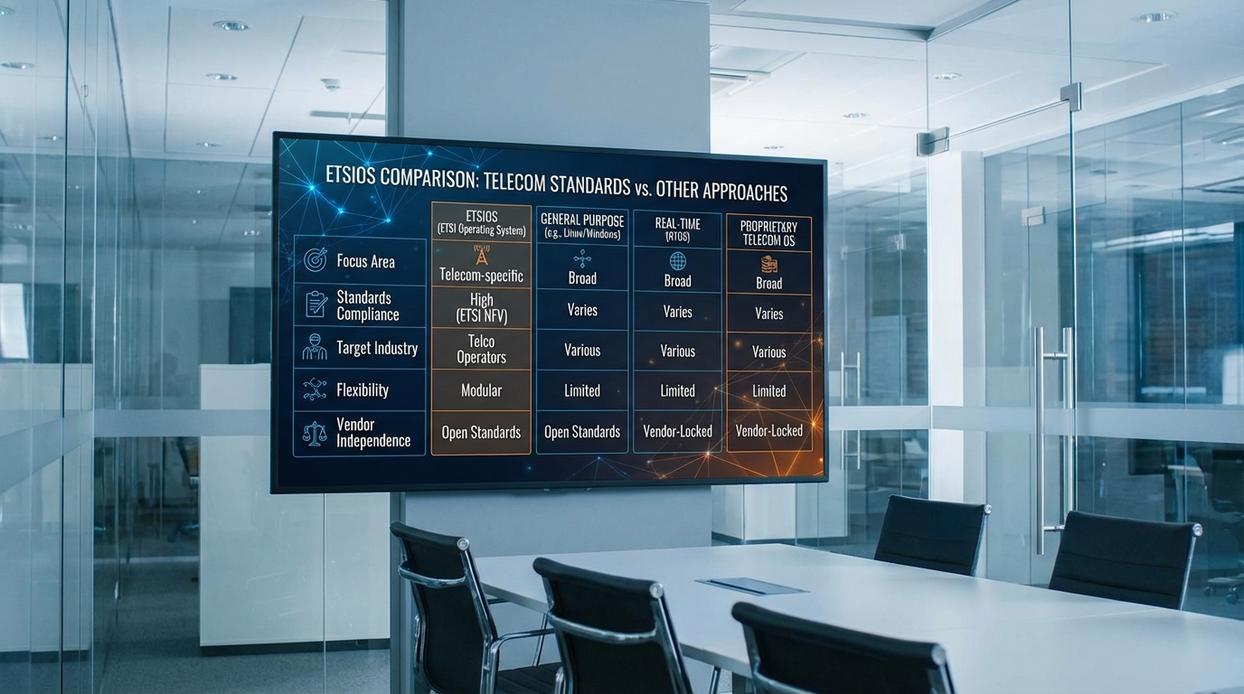
A Head-to-Head Analysis: ETSIOS vs. Agile vs. Waterfall
I once managed a project that looked perfect on paper: tight scope, clear milestones, fixed budget. We chose Waterfall. Three months later, the market shifted, a new API standard emerged, and we were stuck rewriting documentation instead of shipping features. That experience changed how I evaluate frameworks.
Metric 1: Speed and Time-to-Market
Waterfall follows a linear sequence—requirements, design, build, test (think of it as constructing a house where you can’t move the kitchen once the plumbing’s set). It’s deliberate but slow.
Agile uses short development cycles called sprints (time-boxed work periods, usually two weeks), allowing faster releases and feedback loops (Beck et al., Manifesto for Agile Software Development, 2001).
ETSIOS can outpace Agile for ecosystem-native builds because of its pre-integrated toolchain—meaning development, analytics, and optimization layers are already connected. In one launch I observed, this shaved weeks off integration testing. Speed isn’t just about coding faster; it’s about removing friction.
Metric 2: Adaptability to Change
Waterfall struggles when requirements evolve. Agile thrives here, welcoming iterative adjustments. ETSIOS offers high adaptability to technological shifts and market trends within its ecosystem, though it can be more rigid when integrating external systems. Some argue that this limits flexibility. Fair point—but in tightly coupled smart environments, controlled integration can prevent cascading failures (a lesson learned the hard way in many IoT deployments).
Metric 3: Project Complexity and Scope
Waterfall handles low-complexity, predictable projects well. Agile excels with high complexity through iteration and continuous feedback. ETSIOS is purpose-built for interconnected complexity—systems where apps, devices, and analytics constantly exchange data (similar to how smart cities sync traffic, utilities, and sensors).
Metric 4: Ideal Project Type
Waterfall fits static, predictable builds. Agile suits user-driven apps with evolving features. ETSIOS vs traditional frameworks becomes clearest in performance-critical applications that must operate—and optimize—within a dynamic digital ecosystem. Pro tip: if uptime and cross-system harmony are mission-critical, prioritize integration depth over sprint velocity.
Choosing the right framework is less about hype and more about fit.
- Choose ETSIOS If: You need deep smart ecosystem integration, continuous innovation, and performance tuning within a connected environment (think Marvel-level crossovers).
- Choose Agile If: Requirements evolve, feedback loops are constant, and collaboration drives rapid iteration on a standalone product.
- Choose Waterfall If: Scope is fixed, budgets locked, timelines rigid, and documentation must be exhaustive from day one.
In short, ETSIOS vs traditional frameworks comes down to adaptability versus predictability. Some argue Waterfall ensures control; others say Agile prevents stagnation. Both are right — context decides.
Building for Tomorrow’s Digital Ecosystem
Choosing a framework shapes EVERYTHING. Traditional stacks feel safe, but ETSIOS vs traditional frameworks reveals scalability gaps. Define interoperability: systems sharing data seamlessly. To move forward:
- MAP integrations early.
- PRIORITIZE performance metrics.
- TEST modular components in real workflows.
Pro tip: document APIs before writing features.
Build Smarter with ETSIOS
You came here to understand how to build, optimize, and scale smarter apps without getting buried in outdated systems or inefficient workflows. Now you’ve seen how modern ecosystems, automation-ready architectures, and intelligent optimization strategies give you a real competitive edge.
The real pain point isn’t building an app — it’s maintaining performance, scaling cleanly, and adapting fast enough to keep up with user expectations. Falling behind on framework efficiency or optimization standards can cost you time, revenue, and user trust.
That’s where ETSIOS vs traditional frameworks becomes the difference-maker. While traditional systems often require patchwork updates and rigid structures, ETSIOS-based frameworks are designed for agility, smarter integrations, and long-term scalability from day one.
If you’re ready to stop fighting your tech stack and start building within a smarter ecosystem, now is the time to act. Explore ETSIOS tools, implement performance-first frameworks, and upgrade your optimization strategy today. Join the growing community choosing smarter app infrastructure — and future-proof your next build now.

 Tracy Corbittoner writes the kind of etsios-based software frameworks content that people actually send to each other. Not because it's flashy or controversial, but because it's the sort of thing where you read it and immediately think of three people who need to see it. Tracy has a talent for identifying the questions that a lot of people have but haven't quite figured out how to articulate yet — and then answering them properly.
They covers a lot of ground: Etsios-Based Software Frameworks, Smart App Ecosystems, Innovation Alerts, and plenty of adjacent territory that doesn't always get treated with the same seriousness. The consistency across all of it is a certain kind of respect for the reader. Tracy doesn't assume people are stupid, and they doesn't assume they know everything either. They writes for someone who is genuinely trying to figure something out — because that's usually who's actually reading. That assumption shapes everything from how they structures an explanation to how much background they includes before getting to the point.
Beyond the practical stuff, there's something in Tracy's writing that reflects a real investment in the subject — not performed enthusiasm, but the kind of sustained interest that produces insight over time. They has been paying attention to etsios-based software frameworks long enough that they notices things a more casual observer would miss. That depth shows up in the work in ways that are hard to fake.
Tracy Corbittoner writes the kind of etsios-based software frameworks content that people actually send to each other. Not because it's flashy or controversial, but because it's the sort of thing where you read it and immediately think of three people who need to see it. Tracy has a talent for identifying the questions that a lot of people have but haven't quite figured out how to articulate yet — and then answering them properly.
They covers a lot of ground: Etsios-Based Software Frameworks, Smart App Ecosystems, Innovation Alerts, and plenty of adjacent territory that doesn't always get treated with the same seriousness. The consistency across all of it is a certain kind of respect for the reader. Tracy doesn't assume people are stupid, and they doesn't assume they know everything either. They writes for someone who is genuinely trying to figure something out — because that's usually who's actually reading. That assumption shapes everything from how they structures an explanation to how much background they includes before getting to the point.
Beyond the practical stuff, there's something in Tracy's writing that reflects a real investment in the subject — not performed enthusiasm, but the kind of sustained interest that produces insight over time. They has been paying attention to etsios-based software frameworks long enough that they notices things a more casual observer would miss. That depth shows up in the work in ways that are hard to fake.