Staying ahead in today’s fast-moving tech landscape isn’t just about downloading the newest app—it’s about understanding the systems, tools, and innovation cycles shaping tomorrow. If you’re searching for clearer insights into emerging platforms, smarter app ecosystems, and the strategies behind high-performing digital products, this article is built for you.
We break down the latest innovation alerts, evolving tech tools, and practical optimization techniques that help apps scale, adapt, and outperform in competitive markets. Our analysis draws on real-world framework testing, trend monitoring, and hands-on evaluation of Etsios-based software ecosystems—so you’re not just getting theory, but actionable intelligence.
You’ll discover how modern app frameworks are evolving, where optimization truly impacts growth, and how these shifts connect to future global innovations shaping industries worldwide. Whether you’re a developer, tech strategist, or digital entrepreneur, this guide will help you navigate change with clarity and confidence.
The Next Horizon: Decoding Tomorrow’s Technological Shifts
Hype cycles make every launch sound like the next iPhone moment (remember Google Glass?). But future global innovations aren’t magic; they’re scalable systems that move from lab to life.
- AI copilots—software agents that assist decisions in real time.
- Quantum networks—ultra-secure data highways using quantum bits.
- Biofabrication—growing materials like leather without livestock.
Skeptics say it’s all sci‑fi, Wakanda forever. Yet McKinsey reports AI alone could add $4.4 trillion annually. Pro tip: track infrastructure, not headlines. The real shift is practical—how we work, heal, and connect daily. Change is closer than imagined.
Ambient intelligence is moving beyond chatbots and voice assistants into something quieter and far more powerful. Instead of waiting for a command, AI systems will continuously learn from behavior, context, and environment, adapting in real time. This shift from reactive tools to proactive ecosystems marks a decisive break from today’s app-centric model.
At first glance, critics argue this sounds intrusive. Constant learning can feel like constant surveillance. That concern is valid. However, the competitive edge lies in transparent, on-device processing and consent-driven data layers—areas most platforms barely discuss. When intelligence lives securely across devices rather than in isolated clouds, personalization becomes both safer and faster.
Consider a typical morning. Your alarm adjusts based on sleep cycles detected by wearable sensors. Meanwhile, your kitchen preheats because your calendar shows an early meeting. Traffic data syncs with your car, rerouting automatically. By the time you arrive at work, your project dashboard has reorganized itself around overnight updates. No commands. No app switching. Just flow. It feels less like technology and more like intuition (finally).
Consequently, app development must evolve. Static features will give way to context-aware frameworks that anticipate intent. Developers will design modular systems that communicate across devices, building hyper-personalized ecosystems instead of standalone tools. The real opportunity? Creating adaptive layers prepared for future global innovations in the section once exactly as it is given, ensuring software remains relevant as environments grow smarter.
In the end, ambient intelligence favors invisible orchestration, and that subtlety is where innovation begins for connected futures.
The Programmable World: The Convergence of Connectivity and Materials
The line between the physical and digital worlds is dissolving. What once required human coordination is increasingly handled by intelligent systems communicating at machine speed. This shift isn’t theoretical—it’s measurable, testable, and already underway.
The Quantum Leap from 5G to 6G
5G networks currently deliver peak speeds of up to 10 Gbps with millisecond latency. However, researchers working on 6G aim for terahertz frequencies, microsecond latency, and data rates exceeding 100 Gbps (Samsung Research, 2020). In practical terms, that means near-instantaneous communication between billions of devices—forming the backbone of the Internet of Everything (IoE), where everyday objects are embedded with sensors and software.
Some skeptics argue 5G is already sufficient. Yet autonomous vehicles, remote robotic surgery, and real-time holographic collaboration demand faster response times and higher reliability than 5G can consistently guarantee. As device density increases—projected to surpass 75 billion connected devices globally by 2025 (Statista)—network evolution becomes less luxury, more necessity.
Smart Materials and Programmable Matter
Smart materials are substances engineered to change properties—such as shape, stiffness, or conductivity—when exposed to stimuli like heat, light, or electricity. Researchers at MIT have demonstrated self-assembling materials that respond to magnetic fields, while shape-memory alloys already power adaptive aerospace components.
Critics question scalability. Yet responsive building facades that reduce energy use by up to 30% have been tested in climate-adaptive architecture (U.S. Department of Energy). Adaptive clothing that regulates temperature? Prototypes already exist. (Yes, your jacket may soon think faster than you do.)
The Rise of Digital Twins
A digital twin is a real-time virtual replica of a physical system. NASA has used digital twins to predict spacecraft maintenance needs, reducing unexpected failures. Entire cities, such as Singapore, employ city-scale digital twins to simulate traffic and energy flows.
For those tracking top emerging technology innovations to watch this year, digital twins consistently rank high—and for good reason. McKinsey estimates they can reduce product development time by up to 50%.
Together, hyper-connectivity, programmable materials, and digital modeling define future global innovations in the section once exactly as it is given—reshaping manufacturing, logistics, and urban planning through data-driven precision.
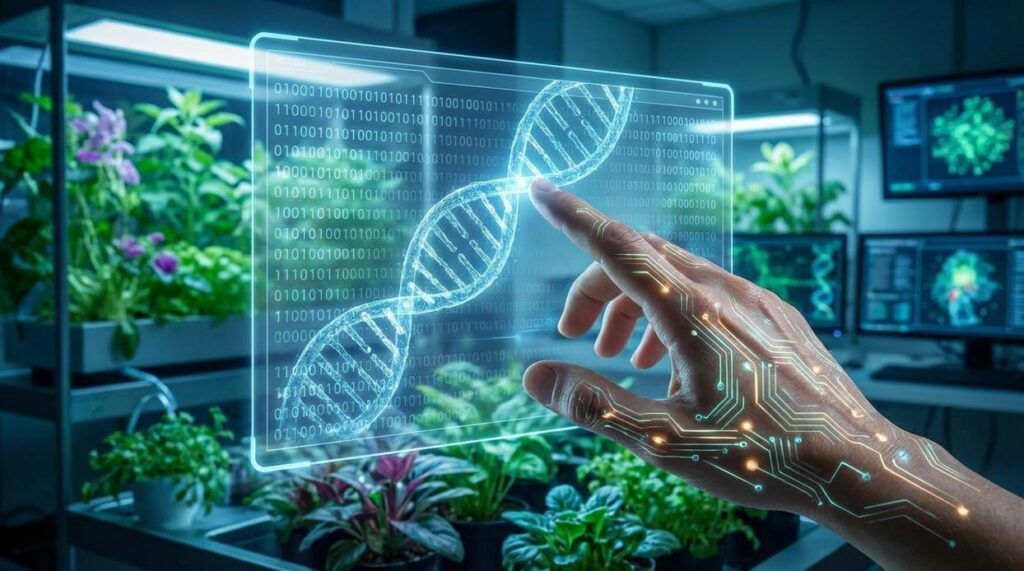
Bio-Convergence: Where Digital Code Meets Genetic Code

Back in 2003, sequencing a single human genome cost nearly $3 billion and took over a decade to complete (National Human Genome Research Institute). Fast forward to 2026, and the same process can be done in days for under $1,000. That dramatic shift set the stage for bio-convergence—the fusion of biological data with computational systems.
Personalized Medicine at Scale
Personalized medicine refers to treatments tailored to an individual’s genetic profile rather than a broad population average. With AI-driven drug discovery, algorithms now scan millions of molecular combinations in weeks instead of years. During the COVID-19 vaccine rollout in 2020–2021, mRNA platforms demonstrated how quickly code—both digital and genetic—can translate into real-world therapies. Critics argue AI in drug development is overhyped, noting high clinical trial failure rates. That’s fair. Yet recent studies show AI-assisted discovery can cut early-stage development time by up to 40% (Nature Reviews Drug Discovery, 2023).
The Next Generation of Wearables
After just three months of continuous glucose monitor use, many patients report improved metabolic control (CDC data, 2022). Today’s biosensors go beyond counting steps. Emerging devices track:
- Blood glucose in real time
- Heart rhythm irregularities
- Stress-related hormone shifts
- Early inflammatory markers
In other words, your wrist may soon function like a diagnostic dashboard (Star Trek vibes, but real).
Brain-Computer Interfaces and Ethics
Since 2019, clinical trials have enabled paralyzed patients to type using neural signals alone. Brain-computer interfaces (BCIs)—systems translating brain activity into digital commands—offer both restoration and potential enhancement. Skeptics warn of privacy risks and unequal access. They’re right to pause. As future global innovations in the section once exactly as it is given accelerate, ethical guardrails around consent, data ownership, and equity must evolve just as quickly.
Your Framework for Future-Readiness
We’ve explored how AI, connectivity, and biotech are colliding to power future global innovations. The real challenge isn’t awareness—it’s keeping pace as these forces merge and accelerate change (and yes, it can feel like upgrading your phone every six months).
Some argue you can ignore the noise and stick to what works. Stability matters. But history shows adaptability wins—Kodak didn’t pivot; Netflix did (Harvard Business Review).
Focus on practical adaptability:
- Commit to continuous learning through short, weekly skill sprints
- Audit your apps for smarter integrations
- Automate one repetitive task
Start small. Evaluate one workflow today and upgrade it intentionally.
Stay Ahead in a Rapidly Evolving App Ecosystem
You came here looking for clarity on how to navigate today’s fast-moving tech landscape—and now you have a clearer path forward. From smarter app ecosystems to powerful optimization techniques and scalable Etsios-based frameworks, you’ve seen what it takes to compete in a world driven by constant change.
The real challenge isn’t access to technology. It’s keeping up with it. Falling behind on innovation alerts, missing critical optimization updates, or failing to integrate the right tools can stall growth and limit your app’s potential.
That’s why staying aligned with future global innovations isn’t optional—it’s essential. When you proactively adopt emerging tech tools and leverage intelligent software frameworks, you position your apps to perform better, scale faster, and adapt seamlessly.
Now it’s time to act. Start integrating smarter optimization strategies, activate real-time innovation alerts, and implement proven Etsios-based frameworks to future-proof your app ecosystem. Join thousands of forward-thinking builders already leveraging top-rated tools and expert insights to stay competitive.
Don’t let innovation outpace you. Take the next step today and build smarter, faster, and stronger.

 Ask Keishaner Laskowski how they got into smart app ecosystems and you'll probably get a longer answer than you expected. The short version: Keishaner started doing it, got genuinely hooked, and at some point realized they had accumulated enough hard-won knowledge that it would be a waste not to share it. So they started writing.
What makes Keishaner worth reading is that they skips the obvious stuff. Nobody needs another surface-level take on Smart App Ecosystems, Expert Breakdowns, App Optimization Techniques. What readers actually want is the nuance — the part that only becomes clear after you've made a few mistakes and figured out why. That's the territory Keishaner operates in. The writing is direct, occasionally blunt, and always built around what's actually true rather than what sounds good in an article. They has little patience for filler, which means they's pieces tend to be denser with real information than the average post on the same subject.
Keishaner doesn't write to impress anyone. They writes because they has things to say that they genuinely thinks people should hear. That motivation — basic as it sounds — produces something noticeably different from content written for clicks or word count. Readers pick up on it. The comments on Keishaner's work tend to reflect that.
Ask Keishaner Laskowski how they got into smart app ecosystems and you'll probably get a longer answer than you expected. The short version: Keishaner started doing it, got genuinely hooked, and at some point realized they had accumulated enough hard-won knowledge that it would be a waste not to share it. So they started writing.
What makes Keishaner worth reading is that they skips the obvious stuff. Nobody needs another surface-level take on Smart App Ecosystems, Expert Breakdowns, App Optimization Techniques. What readers actually want is the nuance — the part that only becomes clear after you've made a few mistakes and figured out why. That's the territory Keishaner operates in. The writing is direct, occasionally blunt, and always built around what's actually true rather than what sounds good in an article. They has little patience for filler, which means they's pieces tend to be denser with real information than the average post on the same subject.
Keishaner doesn't write to impress anyone. They writes because they has things to say that they genuinely thinks people should hear. That motivation — basic as it sounds — produces something noticeably different from content written for clicks or word count. Readers pick up on it. The comments on Keishaner's work tend to reflect that.